Configuring authentication in OpenAM via Yandex Cloud using the SAML protocol
Introduction
In this article, we will configure authentication in OpenAM using user accounts via Yandex Cloud. This will allow you to configure authentication in your corporate applications via OpenAM using Yandex Cloud as the Identity Provider (IdP) and OpenAM as the Service Provider (SP).
Configuring Yandex Cloud
- Go to the Yandex Cloud Organization service.
- Open the Identity Hub tab.
- In the left pane, select the Applications section.
- Click the Create Application button
- Select the SAML (Security Assertion Markup Language) application type
- Enter the application name, for example, openam-saml
- Click the Create Application button

After creating the application, open its settings and click the Download Certificate button. We will need it for further configuration of OpenAM.
Service Provider Configuration
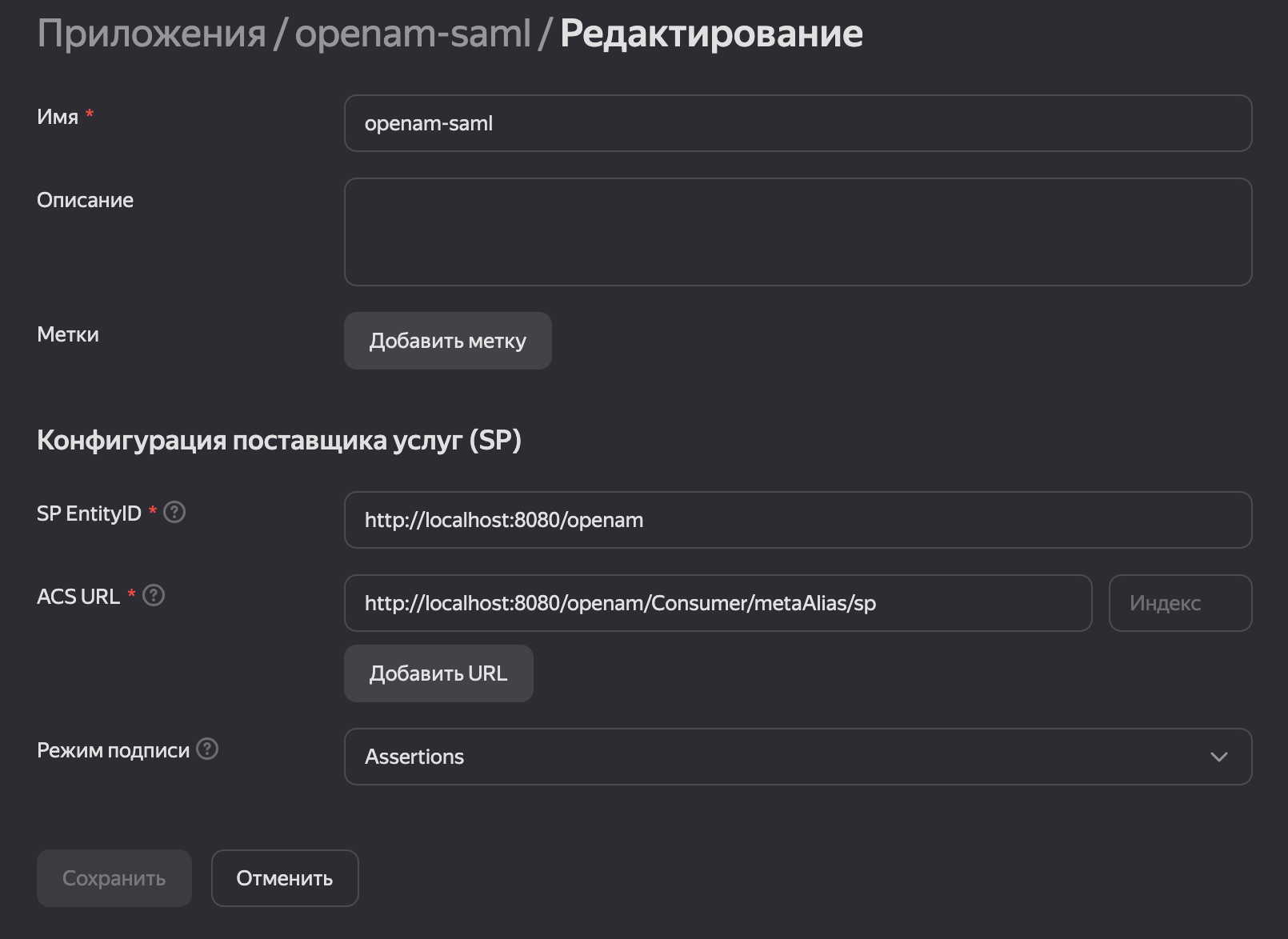
- Open the Yandex settings for the openam-saml application and configure the settings:
- SP Entity ID:
http://localhost:8080/openam - ACS URL:
http://localhost:8080/openam/Consumer/metaAlias/sp
- SP Entity ID:
- Save the changes.
Adding users
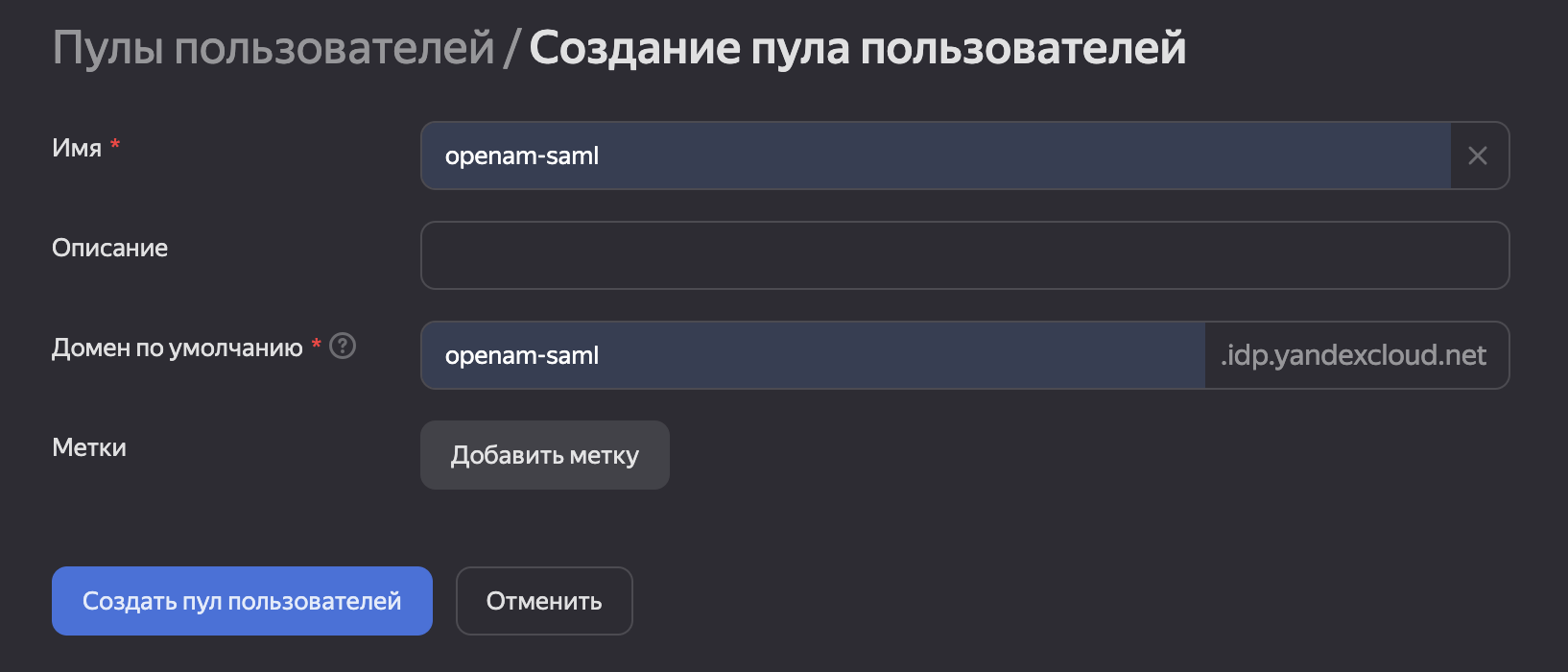
Add a user pool:
- In the Identity Hub section, select User Pools from the menu on the left.
- Click the Create User Pool button.
- Enter the pool details and click Create User Pool.
Add a user to the pool
- In the Identity Hub section of the left-hand menu, select Users
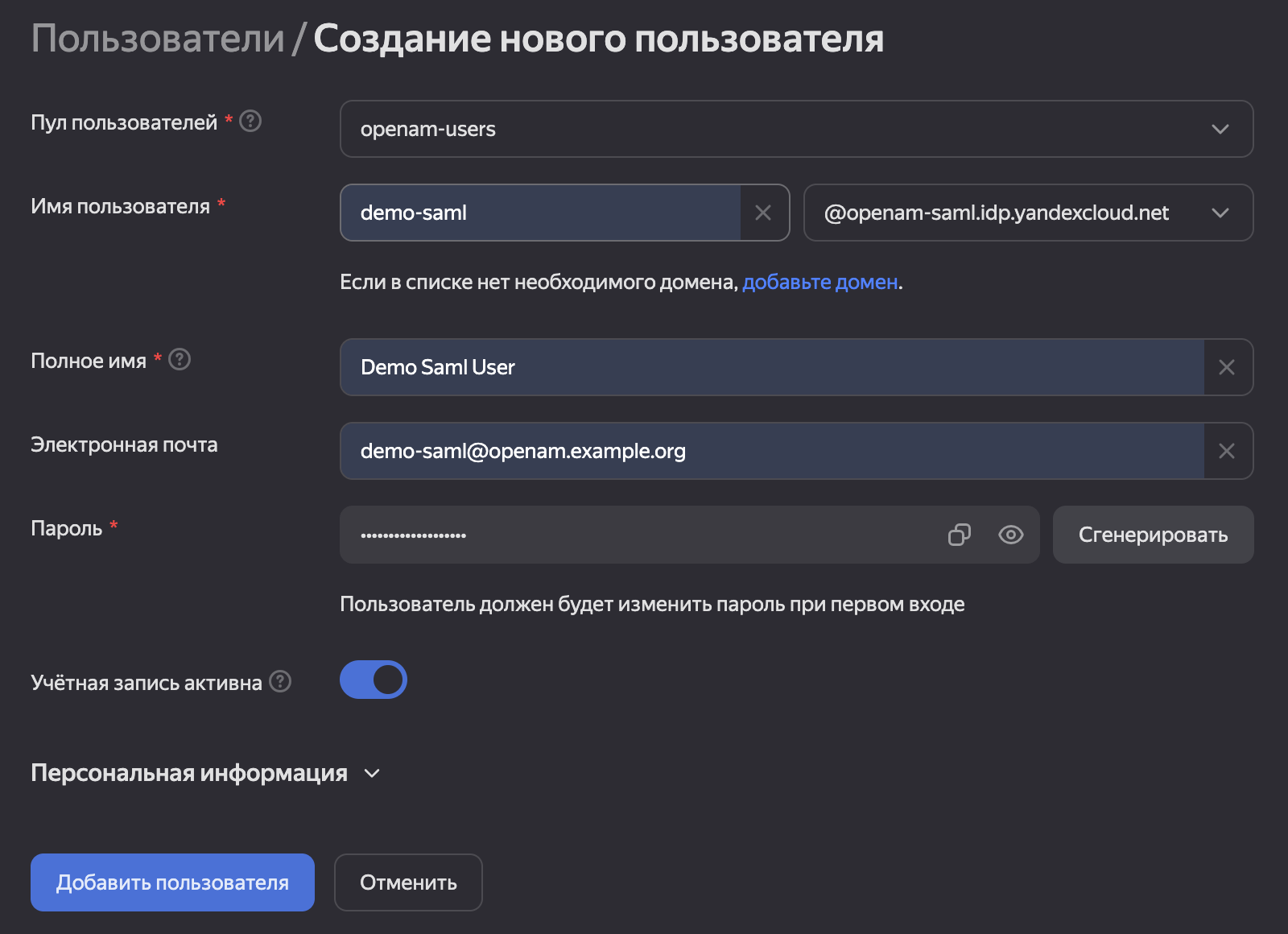
- Click the Add User button
- In the pop-up menu, select Create New User
- Remember the password, as you will need it to log in to OpenAM
- Enter the user details and click Add User
Configuring OpenAM
Installing OpenAM
For simplicity, deploy OpenAM in a Docker container with the command
docker run -p 8080:8080 --name openam openidentityplatform/openam
And perform the initial setup
docker exec -w '/usr/openam/ssoconfiguratortools' openam bash -c \
'echo "ACCEPT_LICENSES=true
SERVER_URL=http://localhost:8080
DEPLOYMENT_URI=/$OPENAM_PATH
BASE_DIR=$OPENAM_DATA_DIR
locale=en_US
PLATFORM_LOCALE=en_US
AM_ENC_KEY=
ADMIN_PWD=passw0rd
AMLDAPUSERPASSWD=p@passw0rd
COOKIE_DOMAIN=localhost
ACCEPT_LICENSES=true
DATA_STORE=embedded
DIRECTORY_SSL=SIMPLE
DIRECTORY_SERVER=localhost
DIRECTORY_PORT=50389
DIRECTORY_ADMIN_PORT=4444
DIRECTORY_JMX_PORT=1689
ROOT_SUFFIX=dc=openam,dc=example,dc=org
DS_DIRMGRDN=cn=Directory Manager
DS_DIRMGRPASSWD=passw0rd" > conf.file && java -jar openam-configurator-tool*.jar --file conf.file'
Add the certificate you downloaded earlier for the Yandex Cloud application you created to the OpenAM keystore.
To do this, copy the certificate to the container.
docker cp openam-saml.cer openam:/usr/openam/config/openam
The password for the keystore is located in the file /usr/openam/config/openam/.storepass.
You can view it using the command
docker exec openam bash -c 'cat /usr/openam/config/openam/.storepass'
Import the certificate into the OpenAM keystore
docker exec -it -w '/usr/openam/config/openam' openam bash -c 'keytool -importcert \
        -alias "yandex-cloud-cert" \
        -keystore keystore.jceks \
        -storetype JCEKS \
        -file openam-saml.cer'
Enter the password and confirm that the certificate is trusted.
Restart the OpenAM container.
docker restart openam
Realm Configuration
Log in to the administrator console at http://localhost:8080/openam. Use the login amadmin and password passw0rd respectively.
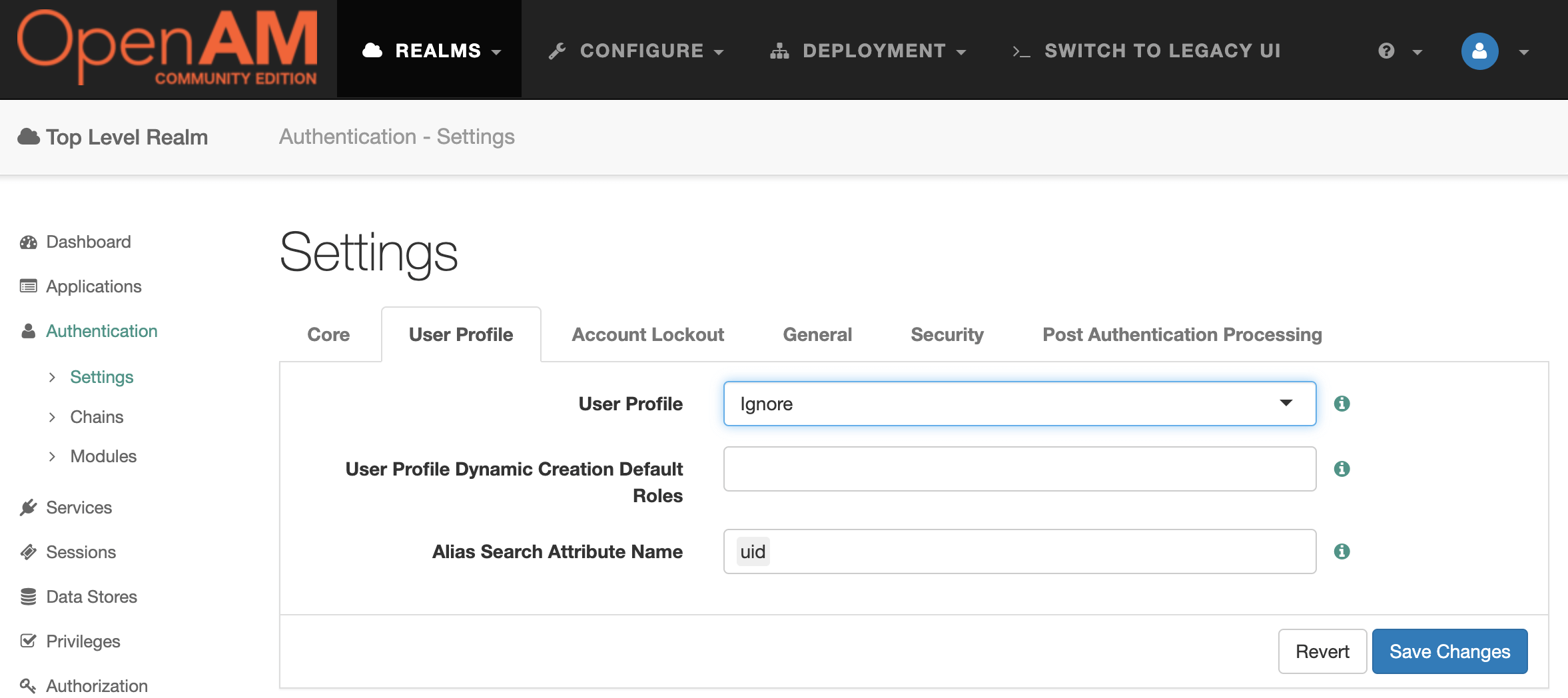
- Open Top Level Realm.
- In the menu on the left, go to Authentication → Settings.
- Go to the User Profile tab and set the User Profile setting to Ignore.
-
Click Save Changes.
Configuring the Service Provider
- In the administrator console, select Top Level Realm
- On the Common Tasks panel, click Configure SAMLv2 Provider
- Next, click Create Hosted Service Provider
-
Enter any name for Circle Of Trust, for example,
openam-yandex, and click Configure. -
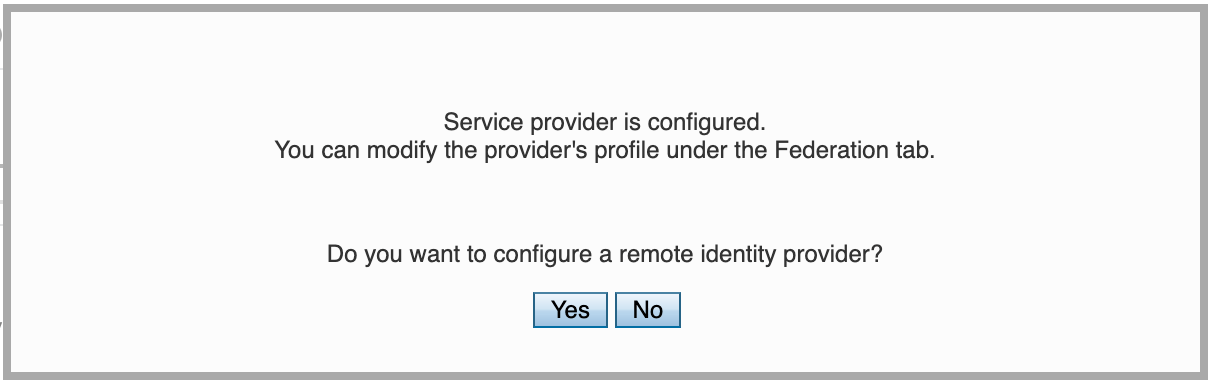
OpenAM will prompt you to configure Remote Identity Provider. Click Yes.
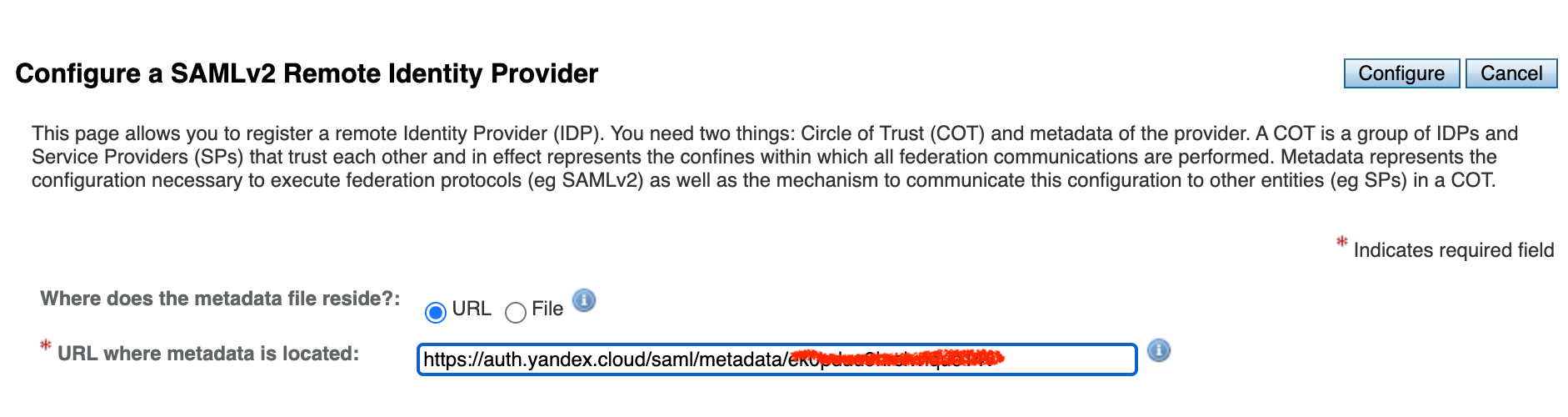
Configuring the Identity Provider
-
Enter the metadata URL from the Yandex application settings and click Configure.
- Reopen Top Level Realm
- In the left pane, navigate to Applications → SAML 2.0
- In the Entity Providers list, open http://localhost:8080/openam
- On the Assertion Content tab, find the Authentication Context section
- Set the Default Authentication Context setting to
Password - In the Authentication Context table, select the values
PasswordandPassword Protected Password - Click Save
- Go to the Assertion Processing tab
- In the Attribute Mapper section, set the Attribute Map setting to
emailaddress=mail - In the Auto Federation section, select the Enabled checkbox and set Attribute to
emailaddress. - Click Save.
- Go to the Services tab.
-
In the SP Service Attributes section, in the Assertion Consumer Service table, select
HTTP-POST.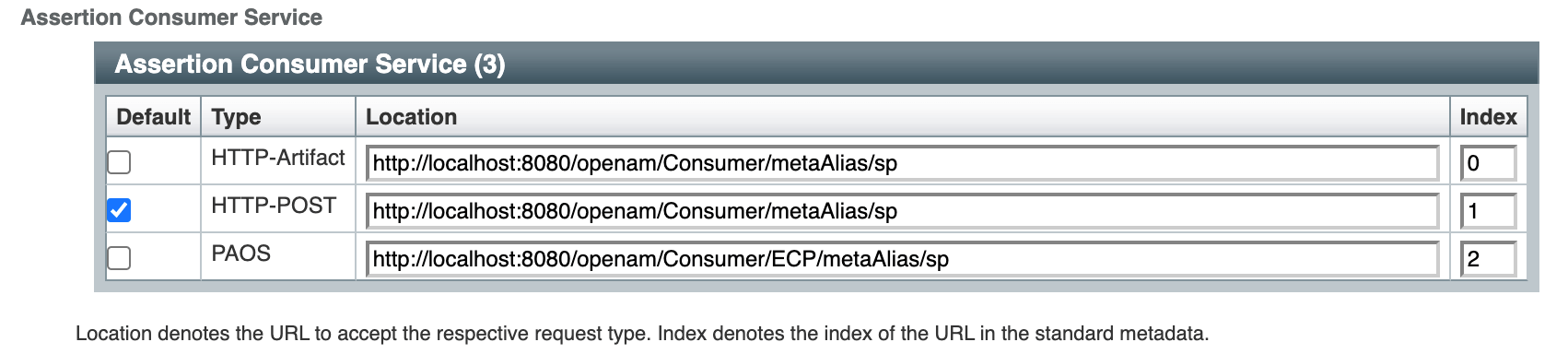
- Click Save
Verifying the solution
- Exit the admin console, Yandex console, or open your browser in incognito mode.
- Follow the authentication link: http://localhost:8080/openam/spssoinit?metaAlias=/sp&idpEntityID=https%3A%2F%2Fauth.yandex.cloud%2Fsaml%2Fek0pduu9hrclvnque14v&RelayState=http%3A%2F%2Flocalhost%3A8080%2Fopenam
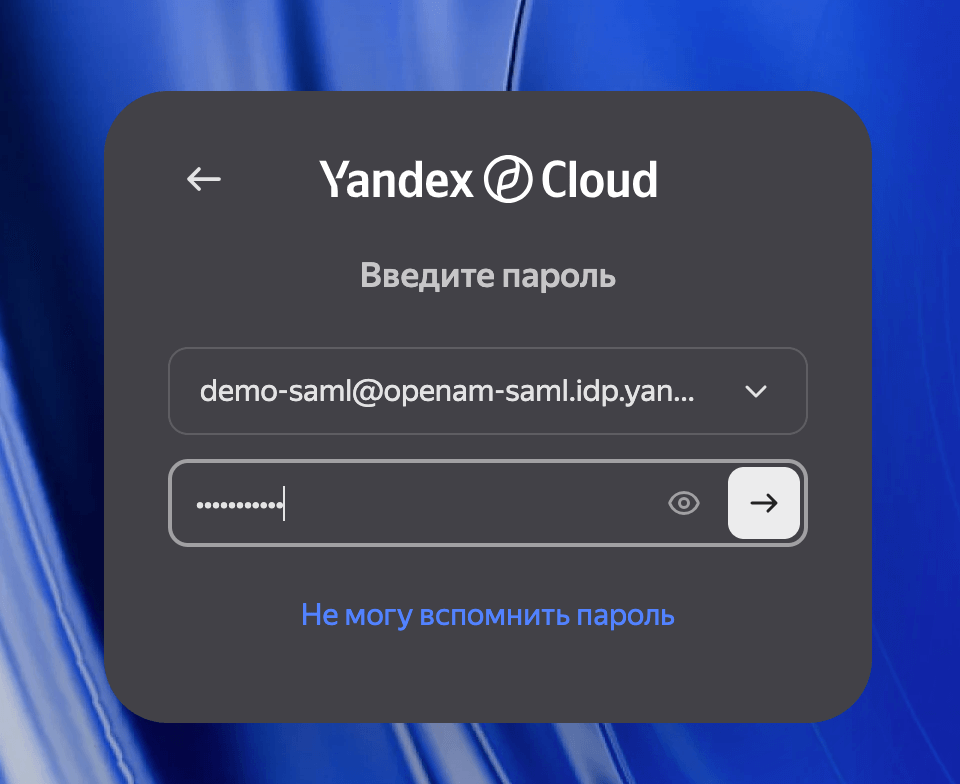
- The Yandex Cloud authentication window will open.
- In the email field, enter your user ID:
demo-saml@openam-saml.idp.yandexcloud.netand click → - In the password field, enter the corresponding password for your account
-
Click →
-
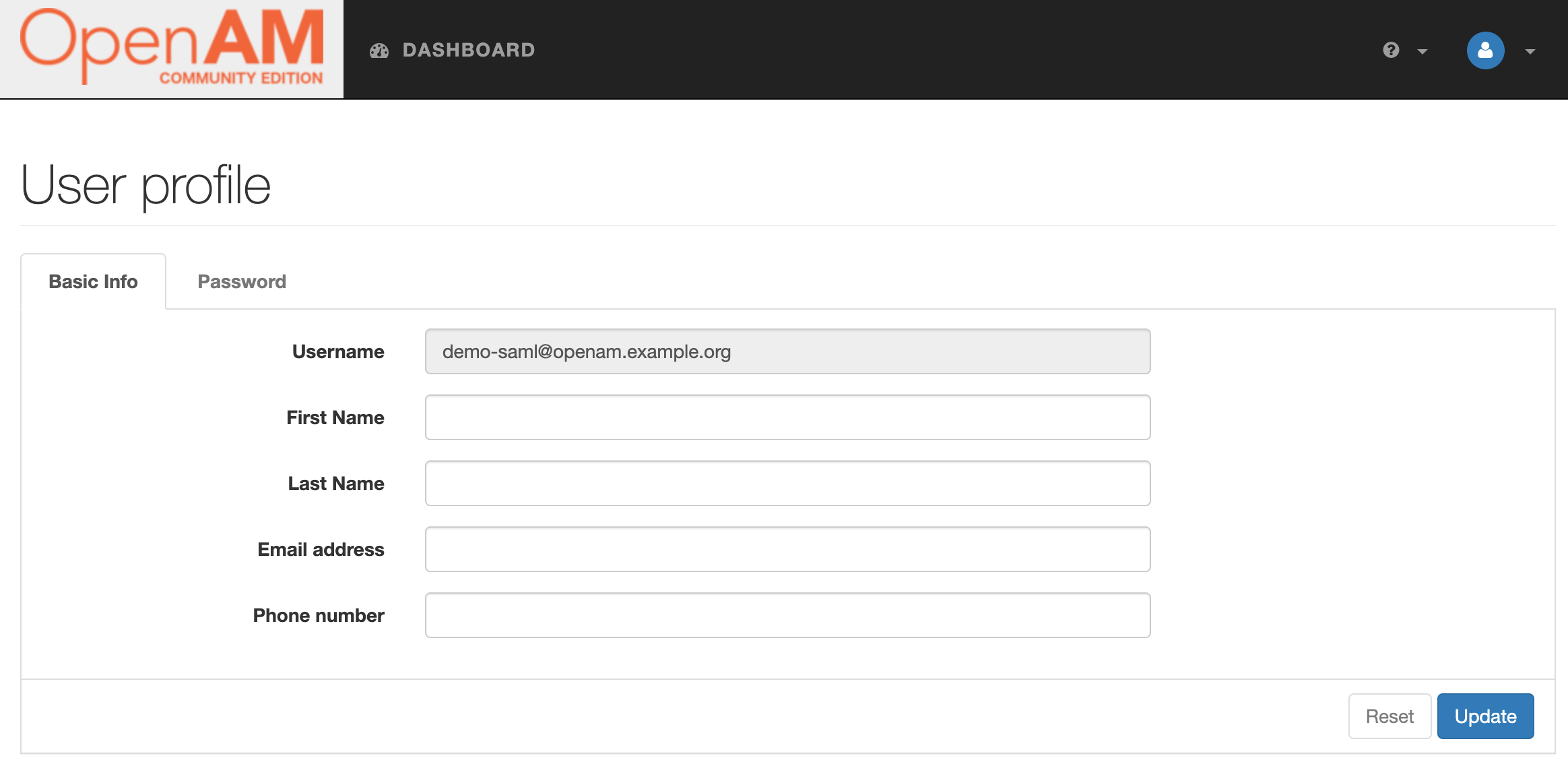
After successful authentication, you will be redirected to the OpenAM console with your Yandex Cloud credentials.
What’s next
For production use, OpenAM must be deployed using a secure SSL connection, for example on a host and using an FQDN, such as https://openam.example.org/openam.
Next, you can use the OpenIG authorization gateway to set up single sign-on (SSO) for your applications.
For more details on configuring OpenAM and OpenIG, please refer to the documentation at https://doc.openidentityplatform.org/openam and https://doc.openidentityplatform.org/openig.